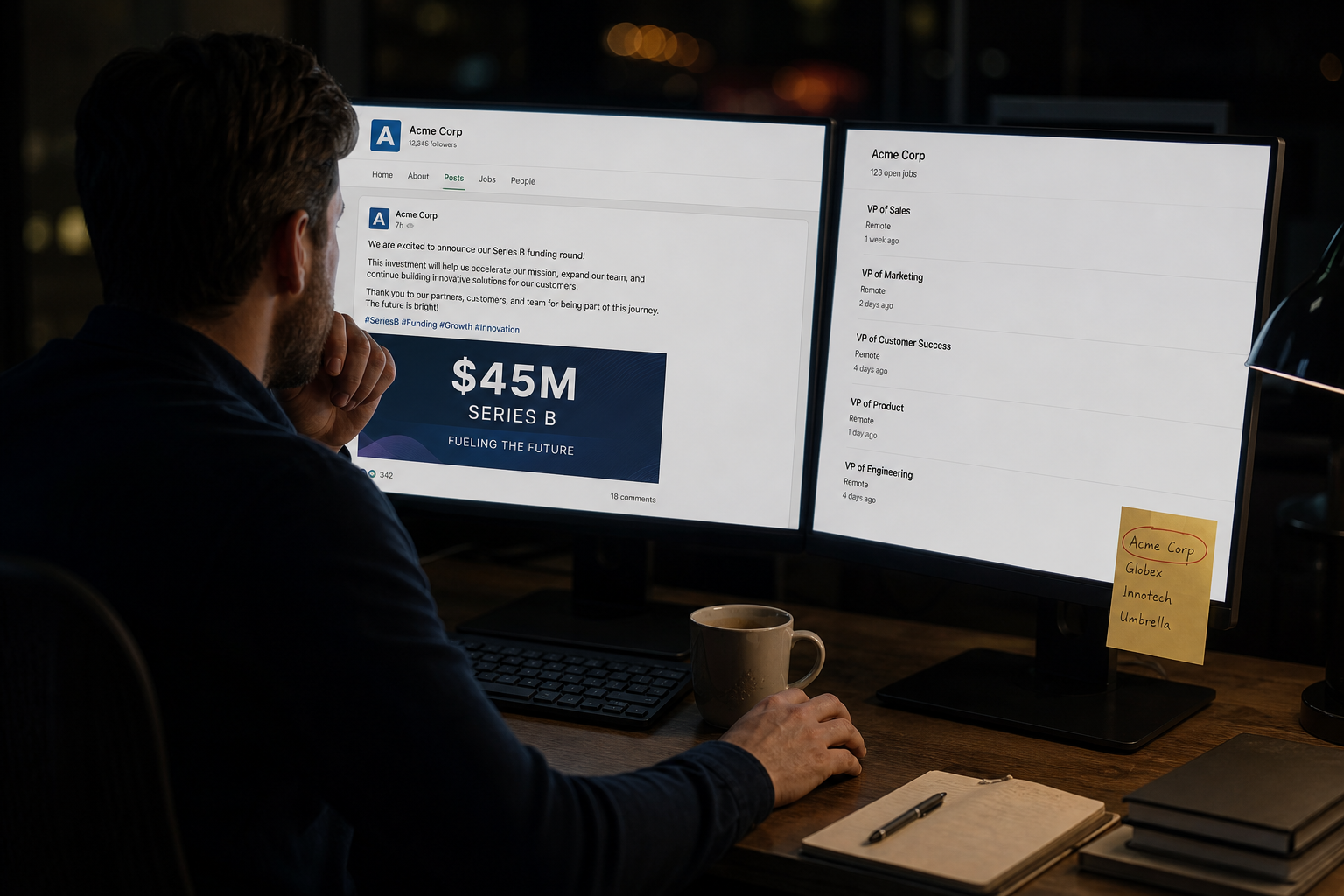
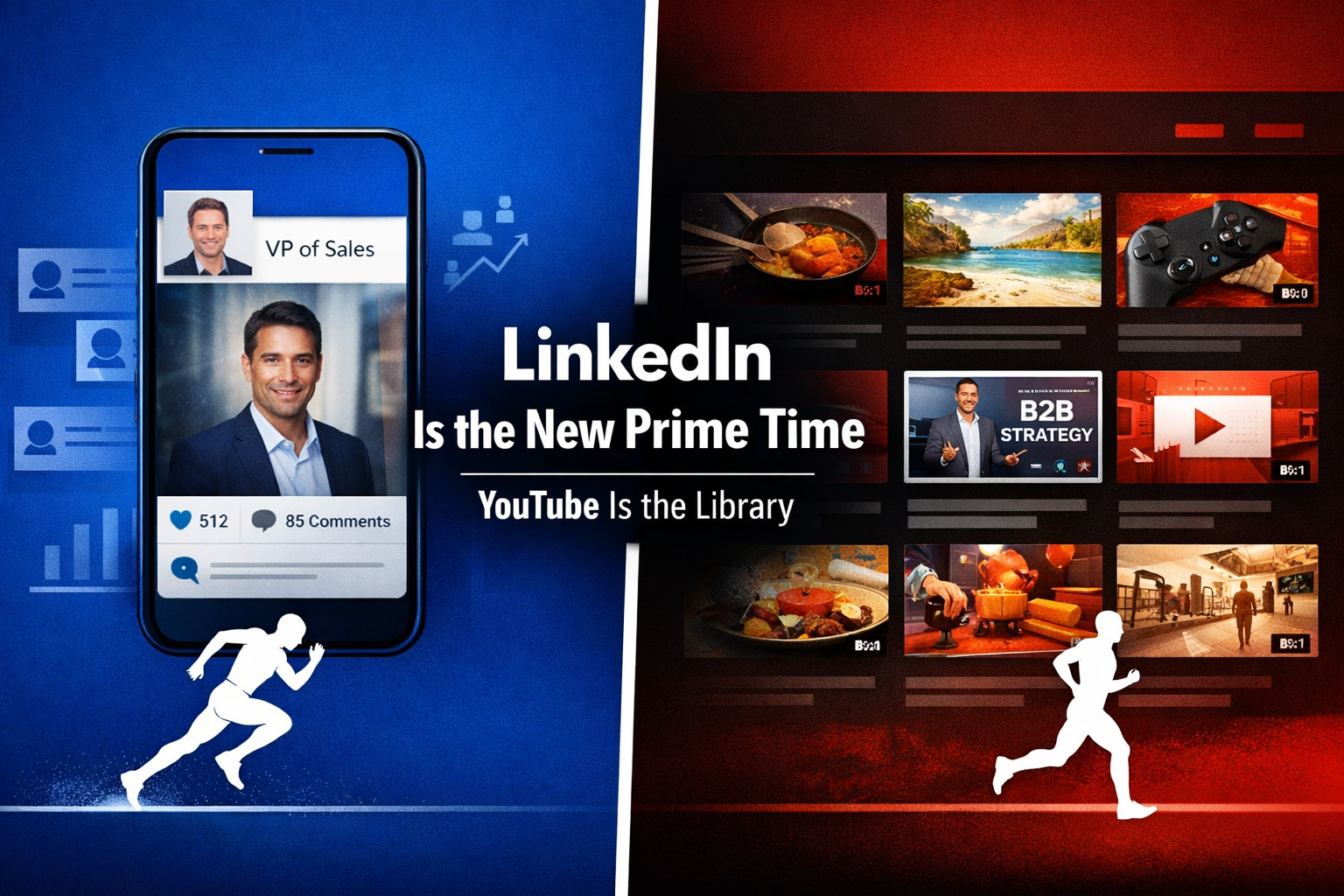
Most B2B sales teams are running outbound and content as two separate engines. One team is posting. Another is prospecting. Neither knows what the other is doing, and the pipeline reflects it.
The teams quietly winning in 2026 are the ones who figured out how to combine both, using content as the warm-up and outbound as the follow-through. And the best part? The framework costs nothing to start.
The Problem Just Got Exposed
If you're a founder trying to book meetings on LinkedIn without a big budget or a sales team behind you, you're not alone. Most people in your position are either overpaying for tools they don't fully use, or blasting connection requests and wondering why nobody replies. The gap isn't money. It's a process. And the good news is the process isn't complicated.
What the Data Is Showing
Honestly, just look at your own inbox. LinkedIn outreach is getting worse across the board. Prospects are more selective than ever, and the old "connect + pitch" playbook is getting ignored before it even lands. What's working instead is a slower, more intentional approach where you actually sound like a human being.
The $0 Framework, Broken Down:
Step 1: Lock Your ICP Before You Touch LinkedIn
This is where most people fail before they even start. Without a sharp Ideal Customer Profile (ICP), every hour spent on LinkedIn is guesswork.
Define yours in six fields (IMPORTANT!!):
- Industry
- Job title or function
- Company size
- Geography
- Trigger event (hiring, recent post, expansion signal)
- Exclusion criteria
The trigger event is the game-changer. It turns a cold stranger into a warm lead before you've said a word.
Step 2: Use Free Search. Filter for Activity.
LinkedIn's native search is more powerful than most people give it credit for. No paid tool needed, at least not yet. The filter that changes everything: recency of activity. It only targets people who have posted, commented, or engaged in the last 30 days. Active profiles respond. Inactive profiles don't. It's that simple. Where to find your best prospects:
- People posting about problems you solve
- Commenters on posts by relevant creators
- People at target companies who are hiring adjacent roles
- Speakers or attendees from industry events
Build your list in a free spreadsheet. Twenty to thirty sharp prospects will always beat three hundred random ones.
Step 3: The Connection Request Is Not a Pitch. Stop Treating It Like One.
This is the single most common mistake, and it's killing reply rates across the board. Your connection request has one job: get accepted. That means one honest, human reason for reaching out. Nothing more. Eg: "Saw your post on pipeline building, thought it was worth connecting." That's it. No offer. No pitch. No five-line paragraph about your service. People accept connections from people who feel relevant. They report people who feel like bots.
Step 4: The Follow-Up Message That Actually Gets Replies
Once they accept, most people panic and oversell. Don't. Send one short message. Focus entirely on their situation. Ask one question. Stay under four sentences. The structure:
- Acknowledge the connection
- Reference something real: their role, a post, a trigger
- Ask one focused, low-pressure question
Example: "Thanks for connecting. Noticed you're scaling your sales team, is outbound prospecting something you're actively building out, or still figuring out the right approach?"
You're not closing a deal. You're opening a door.
Step 5: Run a Weekly Rhythm. Track Everything.
This is what separates people who get results from people who give up after two weeks. The weekly cadence:
- Find 20–30 qualified prospects
- Engage lightly with their content before connecting
- Send connection requests in controlled batches
- Follow up only after acceptance
- Log replies, meetings booked, and no responses every Friday
Review the numbers. Fix one thing at a time. Repeat.
What's Getting You Zero Results Right Now:
Avoid these immediately:
🚫 Long opening messages: Nobody reads them. Cut your message in half. Then cut it again.
🚫 Pitching in the connection request: You haven't earned that right yet.
🚫 Targeting inactive profiles: If they haven't posted in 60+ days, move on.
🚫 Generic follow-ups: "Just checking in" is not a strategy. Give them a new reason to respond.
🚫 Scaling before your process works: More volume doesn't fix a broken message. Nail the small batch first.
The Bottom Line: The winning LinkedIn outbound playbook in 2026 isn't about budget. It's about precision. A sharp ICP. A targeted list. A connection note that feels human. A follow-up that's actually about them.
Run this on a single narrow segment for four to six weeks. Track your numbers. Improve weekly.
And if at any point this feels like too much to manage on your own, that's exactly what we do at Ari Digital.
We run done-for-you outbound campaigns so you can focus on closing, not prospecting. Reach out and let's talk.
%20-%20Copy.png?width=350&height=98&name=Logo%20(1)%20-%20Copy.png)